
Is Curb Painting Legal in Your State? A 50-State Guide
Posted on November 12, 2025
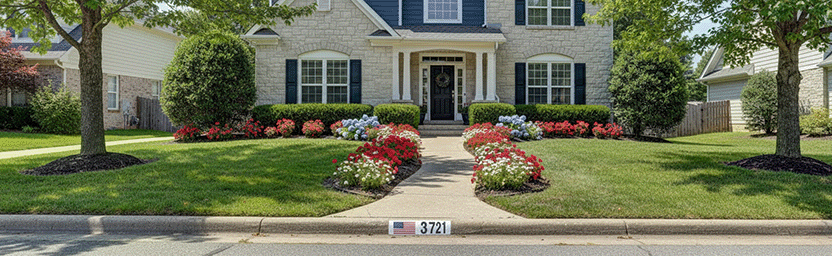
A freshly painted curb address is one of the fastest ways to boost your home's curb appeal and, more importantly, make it easier for first responders and delivery drivers to find you. But before you break out the stencils and paint, there's a critical question: Is it legal?
The laws surrounding curb painting are a patchwork across the United States. What's perfectly acceptable in one city might be explicitly forbidden in another. We've compiled a 50-state guide based on our research to help you navigate the rules.
Important Disclaimer: Laws Change!
We are not lawyers! This guide is based on our national research and experience, but laws and local ordinances change frequently. We strongly encourage you to double- and even triple-check the most current laws for your specific city, county, and HOA before painting.
The "Green Light" States: Generally Legal
In these states, curb painting is often permitted, though local city or HOA (Homeowners' Association) rules still apply. These are great places to start, but a quick check with your city hall is always a good idea.
- Arizona
- California
- Florida
- Kansas
- Missouri
- New Jersey
- New Mexico
- New York
- Oklahoma
- Oregon
- Texas
- Utah
- Washington
The "Yellow Light" States: It's Complicated
These states have mixed regulations. Legality often varies from one city or county to the next. In these areas, it is essential to research your specific local ordinances before proceeding.
- Colorado
- Georgia
- Maryland
- Nevada
- South Dakota
The "Red Light" States: Mostly Illegal or Restricted
In the following states, curb painting is broadly prohibited or heavily restricted. This is often because the curb is considered public property, and any unauthorized marking is considered vandalism. Always check for yourself, but proceed with extreme caution in these states.
- Alabama
- Alaska
- Arkansas
- Connecticut
- Delaware
- Hawaii
- Idaho
- Illinois
- Indiana
- Iowa
- Kentucky
- Louisiana
- Maine
- Massachusetts
- Michigan
- Minnesota
- Mississippi
- Montana
- Nebraska
- New Hampshire
- North Carolina
- North Dakota
- Ohio
- Pennsylvania
- Rhode Island
- South Carolina
- Tennessee
- Vermont
- Virginia
- West Virginia
- Wisconsin
- Wyoming
How to Be 100% Sure
This guide is a starting point, not a final answer. The only way to know for sure is to do a little local research. Here's where to check:
- Your City's Municipal Code: This is the most important one. Go to your city's official website and search for "curb painting," "address numbers," or "public right-of-way."
- Your County Ordinances: If you live in an unincorporated area, the county rules will apply.
- Your Homeowners' Association (HOA): Even if the city allows it, your HOA has the final say. Check your bylaws for rules on exterior modifications or address visibility.
Seriously, check first! A quick phone call to your city's Code Enforcement or Planning department can save you a potential fine or a notice to remove it. Remember, this is about safety and curb appeal, not starting a fight with the city!
From Our Experience: More Than Just a Rulebook
As professional curb painters, we've learned that the law is only half the story. The other half is about safety, community standards, and quality.
A First Responder's View on Safety
We work with an anonymous charity worker who was also a first responder. She's shared stories of the panic and frustration of trying to find a home in an emergency, wasting precious seconds because numbers were hidden, faded, or just too small. "The numbers on the house are very hard to see in most cases," she told us. "Every house should have an address curb painting."
This is the "why" behind what we do. It's why we're launching an initiative in 2026 to provide free curb numbers for low-income individuals in our local Nacogdoches community, with the goal of expanding nationwide.
The "Gotcha" of Local Rules: HOAs vs. City Codes
Even in a "Green Light" city, your Homeowners' Association (HOA) has the final say. Often, the HOA rules are similar to the city's, but with one key difference: uniformity. Some HOAs require a specific black background, while others might mandate the HOA's logo. The good news? We handle this all the time and provide services directly to HOAs to ensure consistency at a price they love.
Bigger, Bolder, Safer: Our 5-Inch Standard
Most city codes only require 4-inch numbers. We use 5-inch numbers as our standard. Why? Because they are significantly more visible from a distance and, frankly, they just look better. Painting 5-inch numbers on-site is difficult and often results in messy, bleeding edges. Because we create our QRCurbs in a controlled studio environment, we can deliver crisp, beautiful 5-inch numbers every time.
A Note for "Red Light" States
For those living in states where traditional curb painting is off-limits, don't lose hope. We are currently in the research and development phase of a brand new address number invention that we believe will benefit *everyone*, regardless of your state or city's rules. Stay tuned!
Answering Your Top Curb Painting Questions
"How long will my curb painting last?"
A professionally painted curb typically lasts anywhere from 1-5 years. You can stretch it longer, but it will begin to fade. We find that refreshing the painting annually not only keeps your home visible for first responders but also boosts the curb appeal and maybe even value of the entire neighborhood!
"Can't I just do it myself?" (The True Cost of DIY)
You definitely can! But before you do, consider the real cost. Most people don't realize that quality materials add up: $8-10 for good paint, $5-10 for stencils, $4-5 for tape, and another $8-10 for a protective enamel clear coat. If you want reflective glass beads, you need a special (and more expensive) rubberized enamel or resin for them to last.
Even without the reflective beads, you're looking at around $40 in materials for a basic black and white job. Factor in your time, the prep work (like grinding the surface), and the frustration of touch-ups, and you'll see why paying for a professional job is well worth the cost.
"What about bad weather? Do I have to wait?"
This is one of the biggest misconceptions. For traditional, on-site painters, yes—rain or extreme cold is a showstopper. But our unique QRCurbs are painted in our studio, so we can work in any weather. More importantly, the powerful concrete adhesive we use for installation works in both hot and cold, wet or dry conditions. There's no need to wait!
Once you've confirmed it's allowed in your area, the fun part begins! A professional curb painting is a fantastic, low-cost investment in your home's safety and style.
Ready to make your home visible? Check our designs and get a quote today!